Plenty of quotes. Not enough decisions. What’s going on?
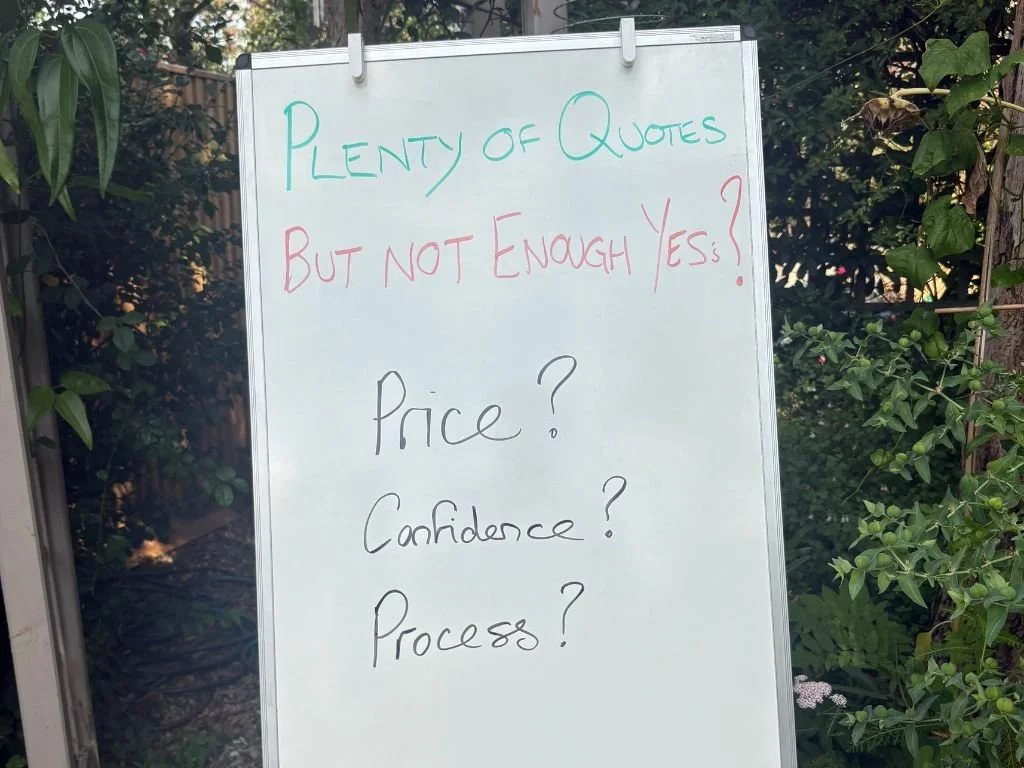
Why landscaping businesses may be finding it harder to convert quotes - and what you can do about it.
Over the past few weeks, I've heard a similar story from several landscaping business owners.
“We're quoting plenty of work. Customers aren't saying no - but they're not saying yes either.”
It's easy to conclude that it's all about price. I'm not convinced it is.
There will always be customers who decide something is simply too expensive. But we're also operating in a period where people continue to feel cautious about making significant financial commitments.
A new garden, landscaping project or major redesign can represent a substantial investment. Even customers who have the money available may take longer to make the decision to spend it.
We can't control customer confidence.
But we can control the confidence customers have in us.
A quote isn't the end of the sales process
One of the common mistakes I see in small businesses is treating the quote as the destination.
An enquiry comes in. You meet the customer. You understand the project. You prepare a detailed quotation or proposal.
Then you press send. And wait.
When customers were quicker to make decisions, that approach may have been enough. In a more cautious market, weaknesses in the sales process become much easier to see.
The businesses that convert enquiries consistently tend to think beyond simply producing a good quote. They consider the whole customer journey - from the first enquiry through to the point at which the customer feels confident enough to say yes.
Before you blame the price, look at the process
If you've got several landscaping quotes sitting with prospective customers at the moment, there are some useful questions to ask.
Did you really understand what mattered to the customer?
Customers aren't simply buying paving, planting, fencing or a new lawn. They're buying an outcome. Understanding why the project matters to them helps you demonstrate value beyond the individual items on a quotation.
Did you build enough trust before sending the quote?
For a significant landscaping project, customers aren't only deciding whether they like the design and price. They're deciding whether they trust you and your team with their home, their money and potentially several weeks or months of disruption.
Does your proposal sell the value - or simply present the cost?
A detailed quotation is important, but it shouldn't be left to do all the selling. Your proposal is another opportunity to reinforce your understanding of the project, your approach, your professionalism and why you're the right business to deliver it.
Have you made the next step clear?
What happens after the quote lands in their inbox? Do they know when you'll contact them? Do they understand the process if they want to proceed?
Removing uncertainty makes buying easier.
And are you actually following up?
Following up doesn't have to mean applying pressure or repeatedly asking, “Have you made a decision yet?”
A good follow-up continues the relationship, gives the customer an opportunity to ask questions and helps uncover what's preventing them from moving forward.
Don't confuse following up with chasing
This distinction matters.
Nobody wants to feel chased into buying something – particularly when they're considering spending tens of thousands of pounds.
But there's a big difference between chasing a customer and helping a customer make a decision.
A simple conversation might uncover that they're uncertain about timings, payment stages, a particular material, disruption during the work or something within the proposal they simply don't understand.
Until you have that conversation, it's very easy to assume:
“They thought we were too expensive.”
That may not be the reason at all.
Know what's happening to your quotes
There's another important business discipline here.
How many enquiries are you receiving?
How many become meetings or site visits?
How many become quotations?
How many quotations become confirmed projects?
How long is it taking customers to decide?
And, importantly, why are you winning or losing the work?
You don't need an elaborate CRM system or complicated dashboard to start understanding this. Even some simple tracking can begin to show where customers are dropping out of your sales process and where you may need to make improvements.
Without that information, it's very easy to make decisions based on gut feel.
Focus on what you can control
None of this means that wider customer confidence doesn't matter. It does.
If people are nervous about spending money, decisions may take longer. Some projects will be postponed and others won't happen at all.
But that doesn't mean every undecided quote should simply be blamed on the economy.
A more cautious market can expose weaknesses in a sales process that were easier to get away with when customers were quicker to say yes.
So if you've got a collection of outstanding landscaping quotes sitting in your inbox at the moment, perhaps the question isn't simply:
“Why aren't customers saying yes?”
It might be:
“What could we do differently to make it easier for the right customers to say yes?”
That's a question worth exploring.
Need some help looking at your sales process?
I work with landscaping, garden design and horticultural businesses to improve the way their businesses operate – including customer journeys, sales processes, pricing, profitability and business planning.
Sometimes a fresh pair of eyes is all it takes to identify where opportunities are being lost.
Find out more about my business support for landscaping businesses
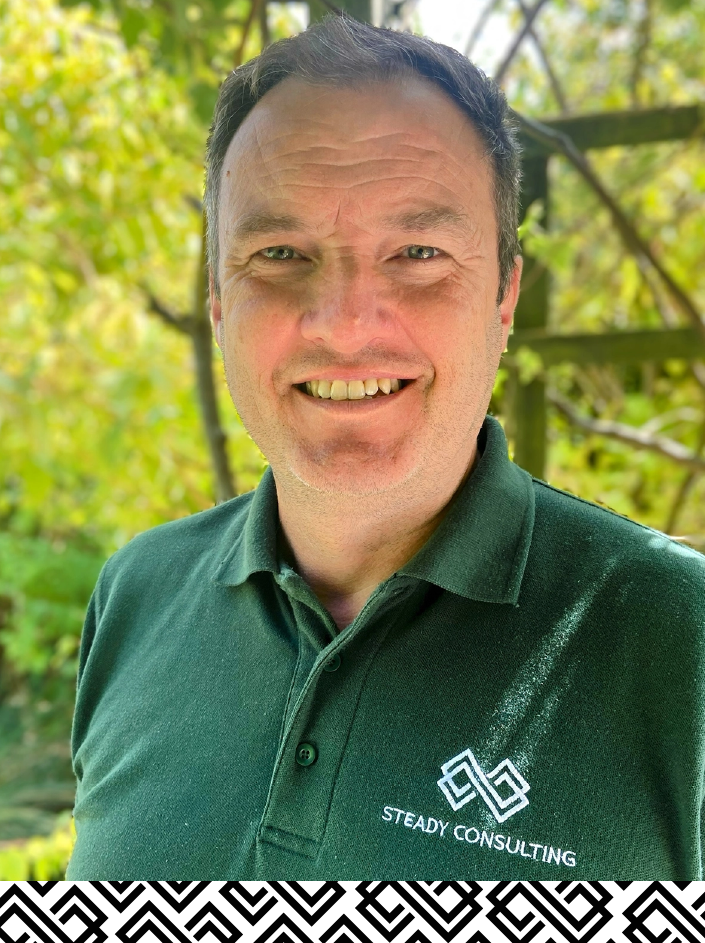
About Neil Stead
Neil is an accomplished Business Consultant & Coach with three decades of experience at one of the UK's most respected and trusted brands. In 2021, he founded Steady Consulting to help small business owners build stronger, more sustainable companies that work for their customers, employees, and themselves.
Focusing his expertise within the horticulture and landscaping industry, Neil provides practical guidance, strategic advice, and dedicated support. He is also a judge at the Pro Landscaper Business Awards and a regular speaker at industry events including FutureScape.